

How to Choose a Construction Marketing Agency
A construction marketing agency helps contractors attract qualified leads through a stronger website, search visibility, paid advertising, and consistent follow-up. The right partner understands local markets, long sales cycles, and project-based buying decisions—and can connect marketing activity to real opportunities, estimates, and revenue.
What should a construction marketing agency offer?
Start by looking for an agency that combines construction industry knowledge with proven digital marketing skills. Your partner should be able to explain how each service supports your business goals—not simply sell a bundle of tactics.
Look for capabilities such as:
- Construction-focused website design and conversion strategy
- Local SEO and Google Business Profile optimization
- Content that answers homeowner and commercial buyer questions
- Google Ads and campaign landing pages
- Lead tracking, reporting, and ongoing improvement
A general marketing agency may know how to generate website traffic, but construction companies need more than clicks. They need the right traffic: property owners, builders, facility managers, and local customers who are ready to request an estimate.
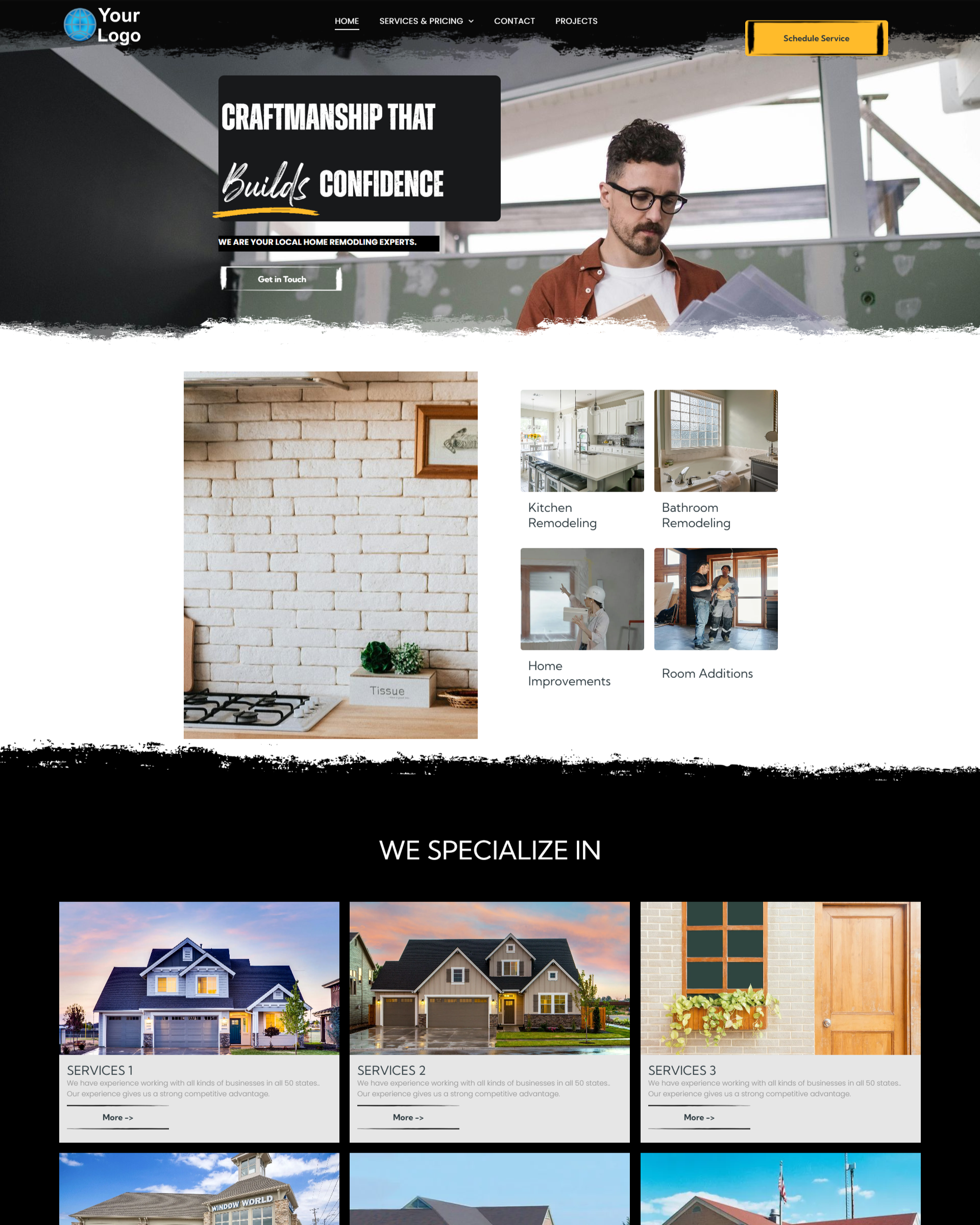
Explore construction website designs to see how an industry-specific website can present your services clearly and professionally.
How do I compare agencies for my construction company?
Use the same questions and evaluation criteria with every agency. This makes it easier to compare value instead of choosing the firm with the most impressive sales presentation.
1. Review relevant experience
Ask whether the agency has worked with contractors, remodelers, roofers, builders, HVAC companies, or other home service businesses. Request examples that show the challenge, strategy, and measurable outcome.
Relevant experience matters because construction marketing often depends on service areas, seasonal demand, project value, trust, and strong visual proof. An agency that understands those details can usually move faster and avoid expensive experimentation.
2. Examine the agency’s process
A good partner should explain what happens after you sign. The process may include discovery, competitor research, website planning, keyword research, content development, campaign setup, and monthly optimization.
Be cautious if the agency promises immediate results without asking about your services, market, current website, ideal customer, or sales process. Effective marketing begins with understanding the business.
3. Ask how results are measured
Marketing reports should connect activity to business outcomes. Ask which metrics you will receive and how the agency separates useful leads from low-quality inquiries.
Useful measurements may include:
- Qualified form submissions and phone calls
- Cost per lead from paid campaigns
- Organic traffic to service pages
- Search visibility for important local terms
- Estimate requests and booked projects
You can begin with a free website analysis to identify technical, messaging, and conversion opportunities before comparing proposals.
Which services does a construction company actually need?
The right mix depends on your market, goals, budget, and current assets. You do not necessarily need every service on day one. Prioritize the gaps that are preventing qualified prospects from finding or trusting you.
Website design
Your website is often the first place a prospect evaluates your company. It should quickly communicate what you do, where you work, why customers should trust you, and how to request an estimate.
Important website elements include:
- Clear service pages for each profitable offering
- Location information for the communities you serve
- Project photos, testimonials, licenses, and credentials
- Strong calls to action on every key page
- Mobile-friendly performance and simple navigation
See the website design service page for more guidance on building a site around your goals.
Search engine optimization
SEO helps your company appear when potential customers search for services such as commercial remodeling, residential additions, concrete work, or roofing in a specific location. A strong campaign usually combines technical improvements, useful content, local optimization, and authoritative links.
SEO is especially valuable for construction companies because a well-ranked service page can generate inquiries for months or years. However, results typically build over time, so ask how the agency will prioritize quick wins while developing long-term visibility.
Paid advertising
Google Ads can provide faster visibility for high-intent searches. The agency should build focused campaigns, use relevant landing pages, track calls and forms, and regularly remove wasteful search terms.
Paid advertising works best when your company can respond promptly and has a clear process for turning inquiries into estimates. Review Google Ad Management when comparing paid campaign support.
What should I ask before signing a marketing agreement?
Ask direct questions about ownership, communication, timelines, and cancellation terms. A trustworthy agency will answer clearly and put important details in writing.
Consider asking:
- Who owns the website, domain, advertising accounts, content, and analytics data?
- Who will manage my account and how often will we communicate?
- What should I expect during the first 30, 60, and 90 days?
- How do you define a qualified lead?
- What happens if we need to pause or end the agreement?
- Can you show reports and examples from comparable businesses?
Also ask whether the agency creates a custom strategy or places every client into the same package. Construction companies vary widely, so your plan should reflect your services, market, project value, and capacity.
Warning signs to avoid
Some red flags can appear before any work begins. Be careful when an agency:
- Guarantees a specific ranking or an unrealistic number of leads
- Uses vague reports filled with impressions but no business outcomes
- Refuses to explain its work in plain language
- Wants to keep ownership of your domain or website
- Cannot provide relevant examples or references
Low pricing is not automatically a problem, but a very cheap plan may provide limited strategy, generic content, or little ongoing attention. Compare expected value and accountability rather than choosing on price alone.
A practical selection checklist
Before making a decision, score each agency from one to five in these areas:
- Construction and local-market experience
- Website and conversion expertise
- SEO and paid advertising capabilities
- Reporting and lead-quality tracking
- Communication, ownership, and transparency
Then compare the total score with the proposed investment and expected business impact. The best agency is not always the largest or least expensive. It is the partner that understands your goals and can show how its work will move prospects toward contacting you.
For a broader overview of available support, review digital marketing packages or marketing services .
What is the best next step?
Choosing the right construction marketing agency starts with defining your ideal customer, most profitable services, service area, and current lead-generation problems. Interview agencies using the same questions, review relevant work, confirm ownership and reporting, and choose a partner that connects marketing activity to qualified opportunities. If your website is outdated or difficult to measure, start with an analysis before committing to a large campaign. If you need immediate visibility, discuss paid search alongside a long-term SEO plan. A transparent, construction-focused partner can help you build a stronger online presence and create a more dependable path from search to signed project.